Mindfulness – A Way to Prevent and Treat Movement Disorders
Introduction
Lately, I’ve been increasingly aware of how important mindfulness is for both our mental and physical well-being. The fast pace of modern life and the pressures that come with it often disconnect us from ourselves.
In this article, I’ll describe how mindfulness can be applied in everyday life and how I use it in my physiotherapy practice to treat and prevent musculoskeletal pain.
What Is Mindfulness
Mindfulness is the practice of consciously being present in the moment. It means focusing fully on what is happening right now, without judgment or distraction.
It involves awareness of your thoughts, feelings, and bodily sensations, as well as your surroundings. While often used in meditation, mindfulness can also be practiced throughout daily life with various techniques and exercises.
Body Mindfulness
In physiotherapy, we mainly work with what is called body mindfulness – what is happening at the level of the body, muscles, joints, tendons, and fascia. We teach our clients to pay attention to what their body might be trying to communicate, such as pain, pressure, or stiffness in certain areas.
I often meet patients who work at desks and spend long hours sitting at a computer. They usually come in with pain or discomfort in the cervical, thoracic, or lumbar spine.
My first questions during an assessment focus on their working posture. What do you sit on? How is your monitor, keyboard, and mouse set up? But most importantly: How do you feel while working? What is your body doing during the workday? Many people can’t answer.
It’s common to be so focused on work that we stop noticing what’s going on around or within us – especially under stress. That’s why it’s important to occasionally pause and check in with your muscles and joints. Is any part stiff or painful? Does something need to be stretched or relaxed? Is there any tension or pressure?
It also helps to check your posture. Where are your head and shoulders? We often find our head jutting forward, which puts strain on the neck muscles. Raised shoulders overwork the upper trapezius. This can lead to neck pain and headaches.

Designed by Microsoft Copilot
Using Mindfulness in Physiotherapy
In physiotherapy, mindfulness can be applied in many ways – for example, when working on ergonomic adjustments, during relaxation techniques, or while performing active exercises.
Personally, I use mindfulness most during strength-based exercises, where clients can more easily connect with their bodies. It’s important for them to notice which muscles are working, how much effort they’re using, and how they’re breathing.
Each person has a different level of body awareness, so it’s best to start slowly and focus on one aspect. Once people begin to notice what they’re actually feeling and which muscles are involved, they’re often positively surprised. They feel more grounded in their bodies – and more alive 🙂
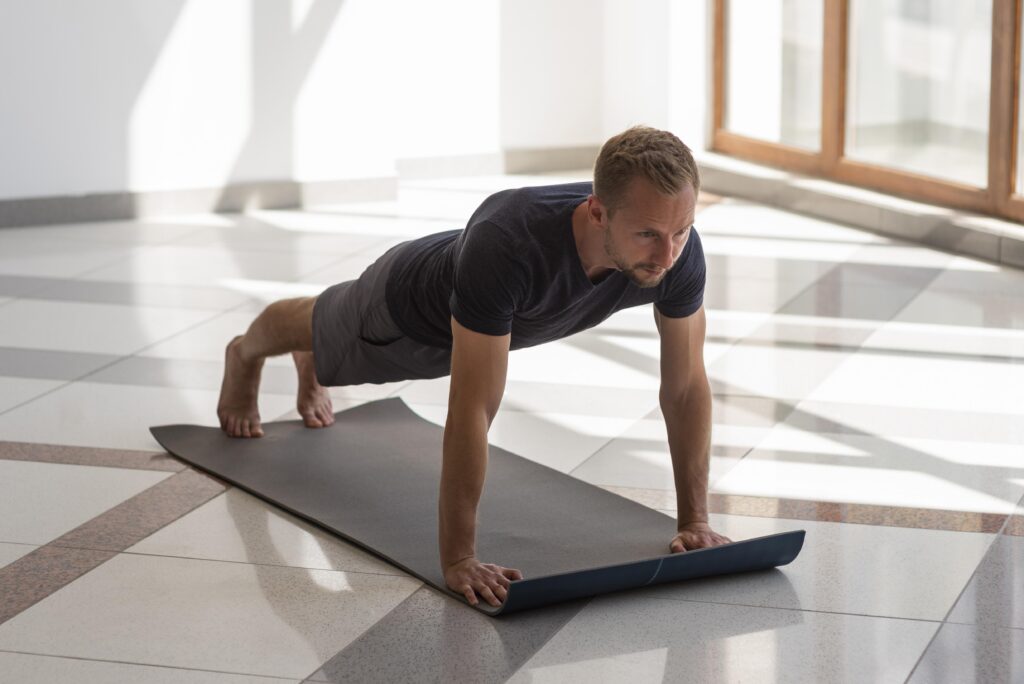
Designed by Freepik
You can train body mindfulness anytime – at work, during sports, or in leisure activities. Both meditation and exercises focused on body awareness are helpful. Mindfulness is also a key element in Eastern practices like yoga, Qigong, and Tai Chi. It’s best to start under the guidance of a teacher or therapist.
Overall, mindfulness is a great tool for reconnecting with yourself. In physiotherapy, it is an irreplaceable part of both treatment and prevention of movement-related issues. You can start practicing mindfulness right now – close your eyes and notice what’s happening in your body. Where do you feel comfortable, and where is there discomfort? What can you do to feel better?
More about my physiotherapy practice here.
More articles can be found here.